
They also voiced concerns over a double penalty being sought to be imposed on them for KG-D6 fields output not matching targets.

The company will wait for sizeable user base for better valuation.

Reliance Industries and its partner BP Plc on Thursday won approval to invest $3.18 billion in R-Series gas field in the flagging KG-D6 block.

RIL, its partner BP plc of UK will invest about Rs 6,000 crore (Rs 60 billion) by 2016 to help sustain and improve recovery from the two main gas fields.

Government has put on auction the gas discovery area it snatched from Reliance Industries in KG-D6 block and the field that Cairn India is seeking to regain around its Rajasthan block.

Mukesh Ambani has resigned from the board of his group's telecom arm, Reliance Jio and handed over the reins of the company to elder son Akash, a step seen as succession planning by the 65-year old billionaire. In a stock exchange filing, Reliance Jio Infocomm said the company's board at a meeting on June 27, "approved the appointment of Akash M Ambani, non-executive director, as chairman of the board of directors of the company." This comes after his father resigned with effect from close of working hours on June 27, it said.

BG Exploration and Production India, a part of UK-based BG group and Reliance Industries, hold 30 per cent stake each in the field, while ONGC has a participating interest of 40 per cent.
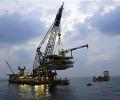
If approved, gas price will rise to $6.775 per million British thermal unit from $4.2 currently.
The list includes CAG's request dated July 2, 2012 for information on award of contract for laying of a 1,395-km pipeline by Mukesh Ambani-owned Reliance Gas Transportation Infrastructure Ltd for shipping KG-D6 gas from east coast to the west.

Business conglomerate Adani Group's chairman Gautam Adani is now the world's second-richest person after overtaking Louis Vuitton's Bernard Arnault, according to Forbes' Real-Time Billionaires List. At the time of writing this report, Gautam Adani's net worth was $153.9 billion, compared to Arnault's net worth of $153.7 billion. Adani is now just behind business magnate Elon Musk, according to Forbes' data.

Nifty50's earnings growth, estimated at 20 per cent by global research and brokerage firm Jefferies for financial year 2023-24 (FY24), will be amongst the top three in the Asian region, and is likely to outperform peers. Asean 40 index with 29.1 per cent estimated earnings growth and Straits Times Index (STI) with 29.1 per cent estimated earnings growth are the only two other indices in the Asian region that are likely to outperform India, suggests the recent Jefferies report, coauthored by Mahesh Nandurkar, their managing director along with Abhinav Sinha and Nishant Poddar.

India on Wednesday announced auction of 46 small discovered oil and gas fields, holding about Rs 70,000 crore worth of hydrocarbon reserves.
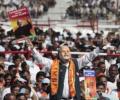
The Aam Aadmi Party slammed BJP's Prime Ministerial candidate Narendra Modi, asking him to come clean on the money spent on his rallies.
A day after deciding to nearly double natural gas prices to $8, Finance Minister P Chidambaram on Friday hinted that power and fertiliser units may get gas at subsidised rates to keep electricity and urea costs down.
In the January, 2013 Cabinet note on revision of prices of all domestically produced natural gas, the ministry had proposed immediate implementation of the formula suggested by a panel, headed by Prime Minister's Economic Advisory Council Chairman C Rangarajan, for all producers except in cases where the current rate is valid for a certain period.
Gas price hike seems to be a distant dream for Reliance Industries and its partners--Niko Resources and BP.

India's corporate sector is likely to report a slowdown in revenue growth and earnings for the July-September 2023 period (Q2FY24), according to earnings estimates by brokerages, after the country's top listed companies posted higher than expected profits for the first quarter. The combined net profit of Nifty50 companies, based on brokerage estimates, is expected to have grown by 19.6 per cent year-on-year (Y-o-Y) to Rs 1.75 trillion in Q2FY24 - a sharp deceleration from 37.6 per cent Y-o-Y growth in the combined earnings of index companies in the April-June 2023 period. According to estimates, the combined earnings in the second quarter would be down 8.8 per cent on a quarter-on-quarter (Q-o-Q) basis and the lowest in the past three quarters.
If the EC decides to put on hold a gas price revision for RIL, it would set a precedent for pricing decisions of the government and policy decisions taken but undergoing procedural delays.

Stock market investors became poorer by Rs 8.30 lakh crore as equities continued their slide for the sixth consecutive day on Friday. The BSE Sensex has tumbled 1,855.58 points or 3 per cent since February 16. During this period, the combined market capitalisation of BSE-listed firms has tanked Rs 8,30,322.61 crore to reach Rs 2,60,00,662.99 crore. "The domestic market is broadly demonstrating a lack of confidence, registering its sixth consecutive day of losses despite global markets turning green.

The Krishna-Godavari (K-G) basin may prove to be a much bigger play for Reliance Industries Ltd. This follows the announcement that its D4 block could hold twice the reserves of the in-production D6 block to the north.
India does not have the facilities needed for developing advanced aerospace products. There is only one wind tunnel in the country, the almost six decade old one in the National Aeronautics Laboratory.
To proceed with a Cabinet proposal to grant the relaxations to RIL, the Election Commission's approval will be sought.
Reliance Industries has signed agreements with nine fertiliser and power companies for gas sales from its field in the Krishna-Godavari basin over the past three months. India's largest private sector company has signed memorandums of understanding with Nagarjuna Fertilisers, GVK Industries, Konaseema Power (all in Andhra Pradesh), Kribhco, Chambal Fertilisers, Iffco, Torrent Power (all in Gujarat), Tata Power and Rashtriya Chemicals & Fertilisers in Maharashtra.

Benchmark indices fell on Monday with the BSE Sensex declining 306 points, mainly dragged down by Reliance Industries. Foreign funds outflow also added to the overall bearish trend in equities on Monday. The 30-share BSE benchmark fell 306.01 points or 0.55 per cent to settle at 55,766.22. During the day, it declined 535.15 points or 0.95 per cent to 55,537.08. The broader NSE Nifty dipped 88.45 points or 0.53 per cent to 16,631.

In Q3, E&P business accounted for just 1.5% of gross revenue

The Adani Group has overtaken Mukesh Ambani Group to become the country's second biggest business group in terms of market cap behind Tatas. Adani Group cos now have a combined m-cap of Rs 19.44 trillion against Ambani Group cos combined m-cap of Rs 17.89 trillion. Tata Group leads the league table with the group market capitalisation of Rs 21.73 trillion on Monday. The Adani Group companies, however, continue to out-perform firms from business groups and the broader market on the bourses by a big margin.
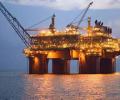
Could get $8.4 per mmBtu from April 2014 by furnishing bank guarantee that would be encashed if D1, D3 gas hoarding proved
The Q1FY24 earnings season has started on a dismal note for corporate India. The early-bird companies' revenue growth has been at a 10-quarter low, while the combined earnings of non-BFSI (banking, financial services, and insurance) companies seem to have hit the ceiling. The numbers suggest corporate India is entirely dependent on BFSI companies and the IT services sector to drive growth in revenue and profit while other sectors are showing signs of stagnation.

A Texas company will submit a report by June on whether a company controlled by RIL 'stole' natural gas from the wells where ONGC is contracted to operate in the KG basin, as alleged by ONGC.

The government has cut windfall profit tax on export of diesel and ATF to their lowest while also reducing the levy on domestically-produced crude in line with softening international oil prices, according to an official order. The levy on crude oil produced by companies such as Oil and Natural Gas Corporation (ONGC) has been cut to Rs 4,350 per tonne from Rs 5,050 per tonne, the order dated February 15 said. Crude oil pumped out of the ground and from below the seabed is refined and converted into fuels like petrol, diesel and aviation turbine fuel (ATF).

Given the hydrogen connection, it's ironic that Hindenburg Research released a long report, accusing the Adani group of financial manipulation, observes Devangshu Datta.

Reliance Industries on Friday hit out at Oil and Natural Gas Corp (ONGC) for suing it over KG gas dispute, saying some elements in the state-owned firm may be "misleading" the chairman D K Sarraf to hide their failure in developing the discoveries made over 13 years.

Equity benchmarks shrugged off lacklustre global cues to clock smart gains on Tuesday, buoyed by strong buying interest in index heavyweights Reliance Industries and HDFC twins. However, a depreciating rupee and unabated foreign fund outflows capped the gains, traders said. The 30-share BSE Sensex rallied 562.75 points or 0.94 per cent to settle at 60,655.72.

With Mukesh Ambani taking over Network 18, the space for disseminating a diverse range of views could shrink, feels Paranjoy Guha Thakurta.

The government has raised the windfall profit tax levied on domestically produced crude oil as well as on the export of diesel and ATF, in line with firming international oil prices, according to an official order. The levy on crude oil produced by companies such as Oil and Natural Gas Corporation (ONGC) has been increased to Rs 2,100 per tonne from Rs 1,700 per tonne, the order dated January 2, said. Crude oil pumped out of the ground and from below the seabed is refined and converted into fuel like petrol, diesel and aviation turbine fuel (ATF).

RIL-BP, who are currently producing about 11.8 million standard cubic metres per day of gas from the flagging eastern offshore KG-D6 block, is targeting newer fields in KG-D6 block and gas discoveries in neighbouring north-east coast and Cauvery basin to raise output.
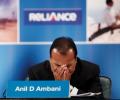
Reliance Power (RPower) has defaulted on payment of interest worth Rs 1.17 crore to DBS Bank India and Rs 44 lakh to IDBI Bank. It failed to pay up interest on October 30, 2021. The firm, part of the Anil Ambani-promoted Reliance group, in filing with BSE, said it has term loans and working capital arrangements with three lenders - YES Bank, IDBI Bank and DBS. Its stock closed 1.41 per cent lower at Rs 12.6 per share on the BSE on December 1. About exposure of YES Bank, there is a 'standstill' applicable till December 26, 2021.
 © 2026 Rediff.com - Advertise with us - Disclaimer - Privacy Policy - Sitemap - Feedback - About us - Terms of use - Grievances